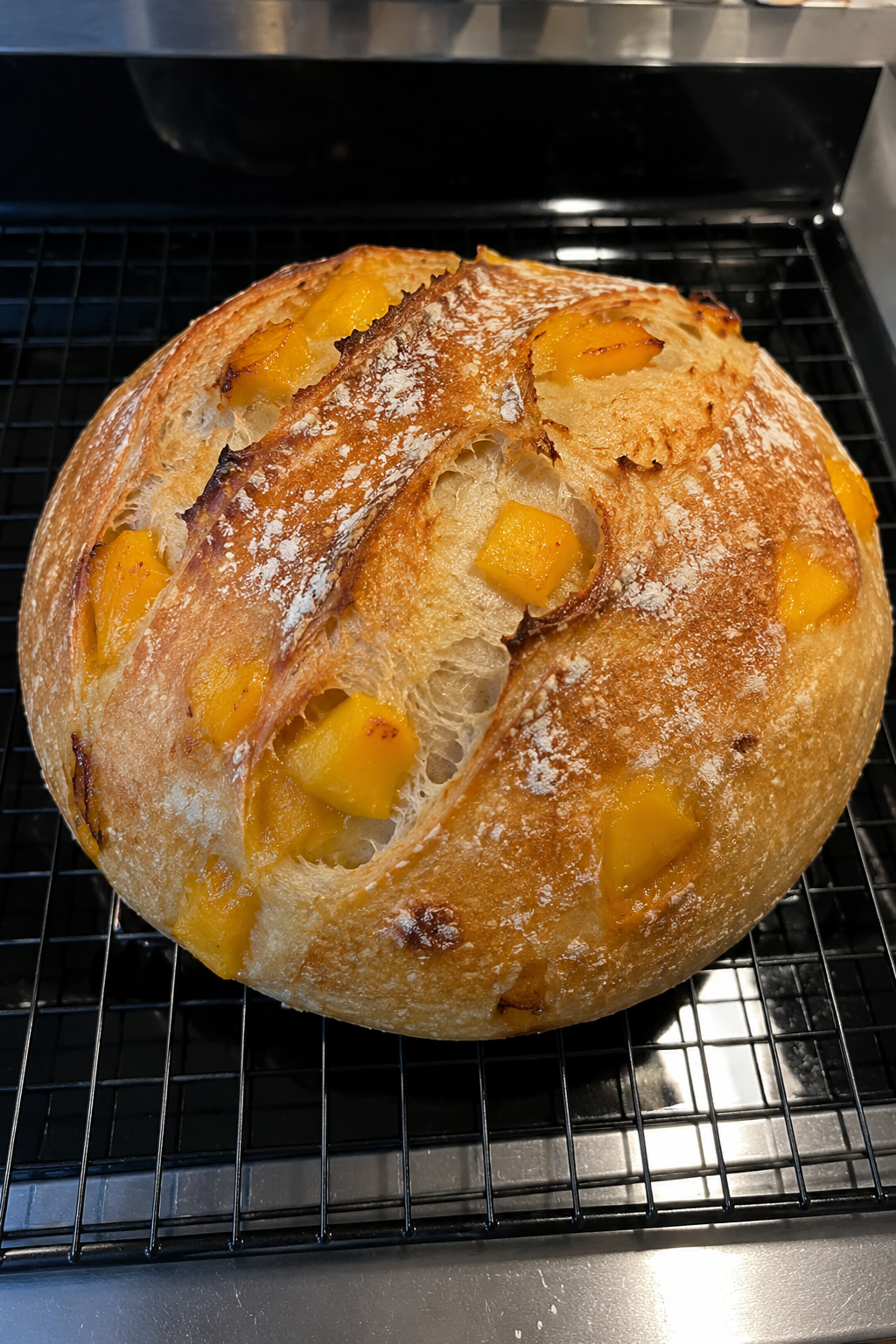
Golden, juicy mango pieces baked into a soft, tangy sourdough loaf with a crisp artisan crust. This tropical twist on classic sourdough is perfect for breakfast, brunch, or a sweet afternoon snack.
Why You’ll Love This Mango Sourdough
If you’re looking for a unique sourdough recipe that stands out, this Mango Sourdough Bread is exactly what you need. Every slice is packed with sweet, juicy mango chunks wrapped inside a chewy, naturally fermented crumb with a beautifully crisp crust. The sweetness of ripe mango balances the mild sour flavor of the sourdough, creating a loaf that’s both refreshing and comforting.
Unlike overly sweet fruit breads, this recipe lets the natural flavor of fresh mango shine. It’s delicious served plain, toasted with butter, topped with cream cheese, or even transformed into French toast.
Whether you’re an experienced sourdough baker or just beginning your baking journey, this recipe is simple enough to follow while delivering bakery-quality results.
Ingredients
For the Dough
- 500g bread flour
- 350g water (room temperature)
- 100g active sourdough starter
- 10g sea salt
For the Filling
- 180-200g fresh ripe mango, diced
- 1 tablespoon flour (helps absorb moisture)
Optional Flavor Boost
- 1 tablespoon honey
- 1 teaspoon vanilla extract
- ½ teaspoon cinnamon
- Zest of ½ lime
Equipment
- Dutch oven
- Mixing bowl
- Dough scraper
- Banneton basket
- Parchment paper
- Kitchen scale
Step 1: Feed Your Starter
Feed your sourdough starter about 4-6 hours before mixing your dough. It should be bubbly, doubled in size, and pass the float test.
A healthy starter creates better oven spring and a lighter crumb.
Step 2: Mix the Dough
In a large bowl combine:
- Bread flour
- Water
- Active starter
Mix until no dry flour remains.
Cover and let rest for 45 minutes.
This process is called autolyse, allowing the flour to fully hydrate while improving gluten development.
Step 3: Add Salt
Sprinkle the salt over the dough.
Wet your hands and fold the dough several times until the salt is fully incorporated.
Cover and let rest for another 30 minutes.
Step 4: Stretch and Fold
Over the next two hours perform four sets of stretch-and-folds every 30 minutes.
Each fold strengthens the gluten structure without kneading.
You’ll notice the dough becoming smoother, stronger, and easier to handle after each fold.
Step 5: Prepare the Mango
While the dough rests:
Wash and peel the mango.
Cut into small cubes.
Pat dry thoroughly with paper towels.
Toss the mango pieces with one tablespoon flour.
This helps prevent excess moisture from making the dough sticky.
Step 6: Add the Mango
After your final stretch and fold:
Flatten the dough gently.
Scatter the mango pieces evenly.
If using:
- Honey
- Vanilla
- Cinnamon
- Lime zest
Add them now.
Fold the dough over itself until the mango is evenly distributed.
Avoid overmixing or crushing the fruit.
Step 7: Bulk Fermentation
Cover the bowl.
Allow the dough to rise at room temperature for 4-6 hours depending on the temperature of your kitchen.
The dough should increase by about 50%.
You’ll also notice bubbles forming around the sides.
Step 8: Shape the Dough
Lightly flour your countertop.
Turn the dough out carefully.
Shape into a tight round loaf while keeping the mango pieces inside as much as possible.
Place seam-side up into a well-floured banneton basket.
Step 9: Cold Proof
Cover the basket.
Refrigerate overnight for 10-14 hours.
Cold proofing develops deeper sourdough flavor and makes scoring easier.
Step 10: Bake
Preheat oven to 475°F (245°C).
Place the Dutch oven inside while preheating.
Turn the dough onto parchment paper.
Score the top using a bread lame or sharp razor.
Transfer into the hot Dutch oven.
Bake:
- 25 minutes covered
- Remove lid
- Bake another 20-25 minutes
The crust should become deep golden brown with caramelized mango pieces peeking through.
Internal temperature should reach 208-210°F (98-99°C).
Step 11: Cool
Allow the loaf to cool for at least one hour before slicing.
Cutting too early may result in a gummy crumb.
Patience is worth it.
Flavor
This loaf offers:
- Light sourdough tang
- Sweet tropical mango flavor
- Crispy artisan crust
- Soft chewy interior
- Beautiful golden crumb
Every bite is balanced between sweet and tangy.
Storage
Store in a bread bag or wrapped in a clean kitchen towel for up to 3 days.
Avoid refrigerating, as it can dry out the bread.
For longer storage, freeze sliced portions for up to 3 months.
Toast directly from frozen when ready to eat.
Serving Ideas
This Mango Sourdough Bread tastes amazing with:
- Salted butter
- Cream cheese
- Honey
- Coconut butter
- Greek yogurt
- Mascarpone
- Ricotta
- Mango jam
It also makes incredible French toast and grilled breakfast sandwiches.
Tips for Success
- Use ripe but firm mangoes to prevent excess moisture.
- Dry the mango pieces well before folding them into the dough.
- Avoid overproofing, as the fruit speeds up fermentation slightly.
- Use bread flour with at least 12% protein for the best structure.
- Keep the dough cool if your kitchen is warm.
- Bake in a preheated Dutch oven for maximum oven spring.
Frequently Asked Questions
Can I use frozen mango?
Yes. Thaw completely and pat dry before adding to the dough.
Can I use dried mango?
Absolutely. Chop it into small pieces and soak in warm water for 15 minutes before using.
Is canned mango okay?
Fresh is best, but canned mango packed in juice can work if drained and dried thoroughly.
Why did my bread become gummy?
Too much moisture from the fruit or slicing before the loaf cooled completely can cause a gummy texture.
Can I make this sweeter?
Yes. Add up to two tablespoons of honey or maple syrup during mixing.
Final Thoughts
Mango Sourdough Bread is a fun, tropical twist on traditional artisan bread. The combination of naturally fermented dough and juicy mango creates a loaf that’s both eye-catching and incredibly delicious. Its crisp crust, open crumb, and bursts of sweet fruit make it ideal for breakfast, brunch, or sharing with friends and family. Whether served warm with butter or toasted the next day, this loaf is sure to become a favorite recipe in your sourdough collection.

Leave a Reply