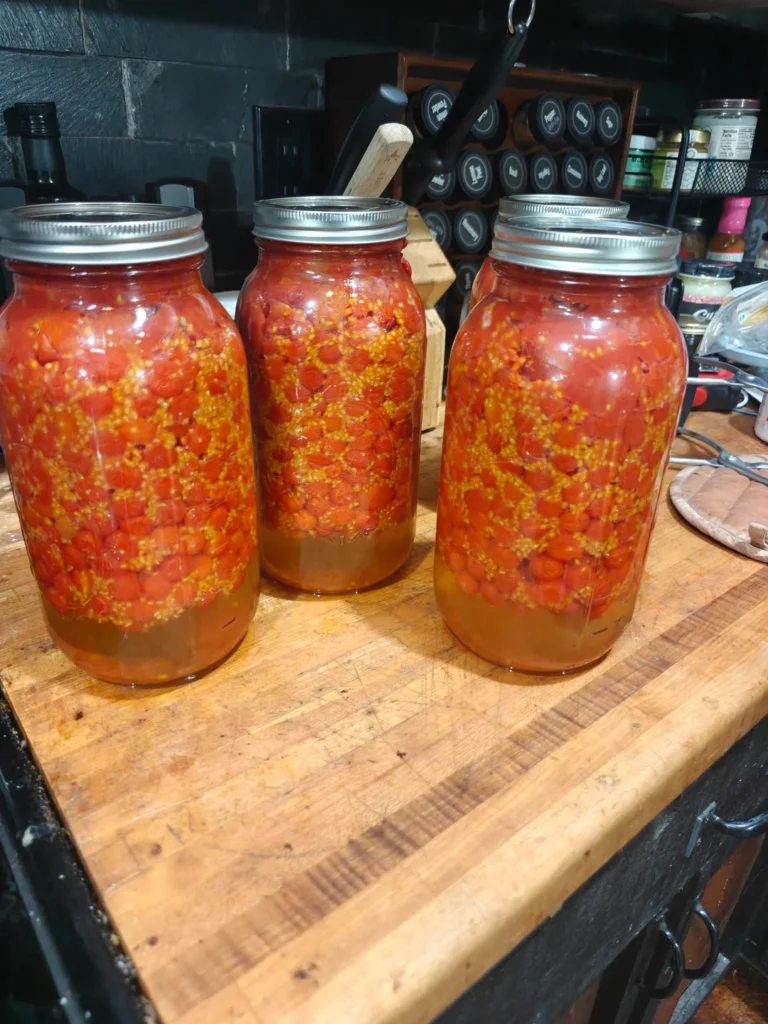

These homemade fermented tomatoes are a great way to preserve the fresh tomato flavor of summer while giving the tomatoes a delicious tangy, slightly salty taste. The jars in the photo appear to contain chopped tomatoes with their seeds and juices, packed into glass jars with liquid around them.
This recipe is designed as a refrigerated fermentation, not as shelf-stable canning. Fermented tomatoes should remain refrigerated after fermentation, and you should use a tested canning recipe if your goal is long-term pantry storage.
Homemade Fermented Tomatoes
Ingredients
- 5 pounds ripe tomatoes
- 5–6 cloves fresh garlic
- 3 tablespoons non-iodized salt
- 4 cups filtered or non-chlorinated water
- 1 teaspoon black peppercorns
- 1 teaspoon red pepper flakes, optional
- 2–3 sprigs fresh dill, optional
- 1 teaspoon mustard seeds, optional
- 2–3 bay leaves, optional
Equipment
- Clean glass fermentation jars
- Small fermentation weights
- Clean cutting board
- Sharp knife
- Large mixing bowl
- Measuring spoons
- Clean spoon
- Loose-fitting jar lids or fermentation lids
Choosing the Tomatoes
Start with fresh, ripe tomatoes that are firm and free from mold, bruises, or spoiled areas. Roma tomatoes, garden tomatoes, cherry tomatoes, and other meaty varieties can all work.
Fresh garden tomatoes are especially good for this recipe because they tend to have plenty of natural flavor. Avoid tomatoes that are already soft or beginning to spoil.
Wash the tomatoes thoroughly under cool running water. Remove the stems and any damaged portions.
You can leave small cherry tomatoes whole, but larger tomatoes are easier to ferment when cut into chunks.
Prepare the Brine
The brine is one of the most important parts of the recipe.
Combine the filtered water and non-iodized salt in a clean container. Stir until the salt has completely dissolved.
Avoid heavily chlorinated water because chlorine can interfere with the natural fermentation process.
The exact amount of salt matters, so measure it rather than simply adding salt until the mixture “tastes right.”
Prepare the Tomatoes
Cut the tomatoes into medium-sized pieces. If you’re using small tomatoes, you can simply cut them in half.
Place the tomatoes into a large clean bowl.
Add the sliced garlic, black peppercorns, red pepper flakes, dill, mustard seeds, or bay leaves if you’re using them.
Give everything a gentle mix.
At this point, the tomatoes will begin releasing their natural juices. Don’t throw those juices away—they are part of what makes the finished tomatoes flavorful.
Pack the Jars
Place the tomato mixture into clean glass jars.
Don’t pack them all the way to the very top. Leave some space at the top because fermentation produces gases and the mixture can expand.
Press the tomatoes down gently with a clean spoon or fermentation tool.
The goal is to keep the tomatoes underneath the liquid.
If there isn’t enough tomato juice to cover everything, pour in enough prepared salt brine to completely submerge the tomatoes.
Place a fermentation weight over the tomatoes to help keep them below the liquid.
This is important because vegetables exposed to air are more likely to develop mold.
Begin Fermentation
Cover the jars with fermentation lids or loosely fitted lids that allow gases to escape.
Leave the jars at normal room temperature, away from direct sunlight.
Fermentation time can vary depending on the temperature of your kitchen and how sour you want the tomatoes.
Begin checking them after about 2–3 days.
You may notice small bubbles forming in the liquid. That’s a normal sign of fermentation.
The tomatoes may also develop a pleasant sour aroma.
Taste a small amount with a clean utensil after a few days. If you like the flavor, you can move the jars to the refrigerator.
If you prefer a stronger, tangier flavor, fermentation can continue for a little longer while you monitor the jars.
What the Finished Tomatoes Taste Like
Properly fermented tomatoes have a completely different flavor from fresh tomatoes.
They become:
- Tangy
- Slightly salty
- Juicy
- Savory
- Lightly acidic
- Full of fresh tomato flavor
Garlic and spices add even more flavor.
The liquid can also become deliciously seasoned and can be used in small amounts in sauces, dressings, marinades, or other dishes.
How to Store Fermented Tomatoes
Once the tomatoes have reached the flavor you want, transfer them to the refrigerator.
Keep the tomatoes submerged under their liquid and use clean utensils whenever you remove some from the jar.
Refrigeration slows fermentation considerably but does not necessarily stop it completely.
For that reason, periodically check the jars for unusual odors, colors, textures, or visible mold.
If you see mold or the tomatoes develop a rotten or otherwise unpleasant smell, discard the entire batch rather than trying to remove the affected portion.
Important Food-Safety Note
These tomatoes should not be treated as shelf-stable canned tomatoes simply because they are in sealed jars.
A jar with a lid is not the same thing as properly pressure-canned or water-bath-canned food. Safe canning depends on the food’s acidity, recipe, processing method, jar size, altitude, and processing time.
If your goal is to make tomatoes that can safely sit in a pantry for months, use a tested tomato canning recipe from a reputable food-preservation authority and follow the processing instructions exactly.
For this recipe, think of the jars as fermented vegetables that are kept refrigerated.
Ways to Use Fermented Tomatoes
There are plenty of ways to enjoy them.
Serve them alongside grilled meat, burgers, sandwiches, eggs, or roasted vegetables.
You can also chop them and add them to:
- Pasta
- Pizza
- Salads
- Sandwiches
- Tacos
- Scrambled eggs
- Homemade salsa
- Grain bowls
- Beans
- Soups and stews
The flavorful tomato liquid can also be added to sauces for an extra savory and tangy kick.
Tips for Better Results
Use fresh tomatoes: The better your tomatoes taste before fermentation, the better the finished product will be.
Keep everything submerged: Tomatoes sitting above the liquid have more exposure to oxygen.
Use clean equipment: Wash jars, utensils, and fermentation weights thoroughly before starting.
Measure your salt: Consistency is important when fermenting vegetables.
Don’t rush it: Fermentation takes time. Temperature can make the process faster or slower.
Trust your senses: A pleasantly sour, fermented aroma is expected. A rotten, putrid, or otherwise strongly unpleasant smell is not.
Final Thoughts
Homemade fermented tomatoes are a simple and flavorful way to enjoy the taste of fresh tomatoes with a delicious fermented twist. With ripe tomatoes, salt, water, garlic, and a few optional spices, you can create a flavorful batch right in your own kitchen.
The finished tomatoes are especially good for people who love old-fashioned food preservation and homemade garden recipes. They’re also a great way to use up a large tomato harvest before the season ends.
Just remember that fermentation and canning are two different preservation methods. Keep fermented tomatoes refrigerated, and don’t store them at room temperature as if they were commercially canned or properly processed home-canned tomatoes.