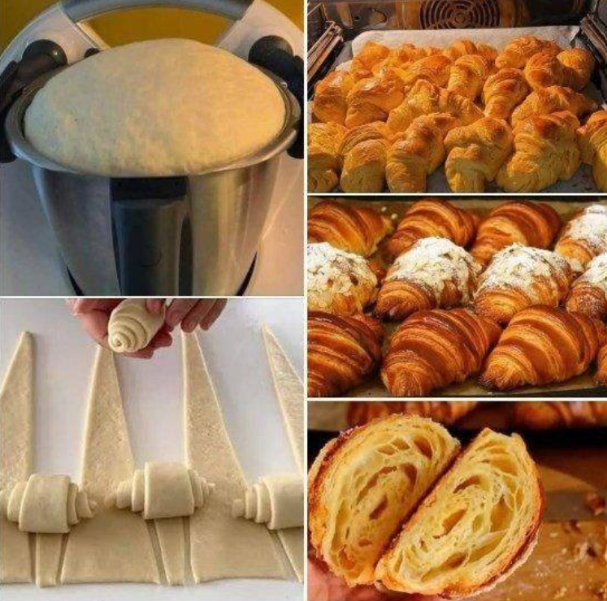
Nothing compares to the aroma of freshly baked homemade French croissants. With their flaky golden crust, delicate buttery layers, and soft honeycomb interior, croissants are one of the most iconic pastries in the world. While they require patience, the result is absolutely worth it. This step-by-step recipe walks you through creating authentic bakery-style croissants right in your own kitchen.
Perfect for breakfast, brunch, holidays, or an elegant afternoon treat, these croissants pair beautifully with coffee, tea, jam, or simply a spread of butter. Once you master the lamination process, you’ll never look at store-bought croissants the same way again.
Why You’ll Love This Recipe
This croissant recipe delivers everything you love about authentic French pastries.
- Light and airy interior
- Crispy, flaky exterior
- Rich buttery flavor
- Beautiful honeycomb layers
- Bakery-quality results at home
- Perfect for sweet or savory fillings
- Freezer-friendly dough
- Great for special occasions
Ingredients
For the Dough
- 4 cups (500g) bread flour
- ¼ cup (50g) granulated sugar
- 2¼ teaspoons (7g) instant yeast
- 2 teaspoons salt
- 1¼ cups (300ml) warm whole milk
- 2 tablespoons unsalted butter, softened
For the Butter Layer
- 1¼ cups (280g) unsalted European-style butter, cold but pliable
Egg Wash
- 1 large egg
- 1 tablespoon milk
Kitchen Equipment
You’ll need:
- Stand mixer (optional)
- Large mixing bowl
- Rolling pin
- Bench scraper
- Plastic wrap
- Baking sheets
- Parchment paper
- Pastry brush
- Sharp knife or pizza cutter
- Ruler
Choosing the Best Ingredients
Bread Flour
Bread flour contains more protein than all-purpose flour, creating strong gluten that supports the many buttery layers.
Butter
European-style butter with at least 82% butterfat produces the flakiest croissants because it contains less water.
Yeast
Instant yeast is convenient and reliable, helping the dough rise evenly without requiring proofing beforehand.
Milk
Whole milk adds richness and tenderness to the dough.
Step-by-Step Instructions
Step 1: Prepare the Dough
In a large bowl combine:
- Bread flour
- Sugar
- Instant yeast
- Salt
Mix well.
Add warm milk and softened butter.
Mix until a rough dough forms.
Step 2: Knead
Knead for about 8–10 minutes until the dough becomes smooth and elastic.
It should be soft but not sticky.
Step 3: First Rise
Place the dough into a lightly greased bowl.
Cover with plastic wrap.
Let rise for about 1½ hours until doubled in size.
Step 4: Chill
Punch down the dough.
Flatten into a rectangle.
Wrap tightly.
Refrigerate for at least 2 hours or overnight.
Cold dough is easier to laminate.
Prepare the Butter Block
Place the cold butter between two sheets of parchment paper.
Using a rolling pin, flatten it into an 8-inch square.
Keep the butter cold but flexible.
Refrigerate until needed.
Laminating the Dough
Step 5: Roll the Dough
Roll the chilled dough into a rectangle approximately twice the size of the butter block.
Place the butter square in the center.
Fold both sides over the butter like an envelope.
Seal the edges.
Step 6: First Fold
Roll into a long rectangle.
Fold into thirds like a business letter.
Wrap and chill for 30 minutes.
Step 7: Second Fold
Rotate the dough 90 degrees.
Roll again into a rectangle.
Fold into thirds.
Chill another 30 minutes.
Step 8: Third Fold
Repeat the rolling and folding one final time.
Refrigerate for at least 1 hour.
These folds create the signature flaky layers.
Shaping the Croissants
Step 9: Roll the Dough
Roll into a large rectangle about ¼ inch thick.
Trim the edges for clean layers.
Step 10: Cut Triangles
Using a ruler, cut long triangles approximately:
- 5 inches wide
- 10 inches long
Uniform pieces ensure even baking.
Step 11: Shape
Cut a small slit at the base of each triangle.
Stretch gently.
Roll tightly toward the tip.
Curve slightly into the traditional crescent shape.
Final Proof
Arrange croissants on parchment-lined baking sheets.
Leave plenty of space between them.
Cover loosely.
Allow to proof for 2–3 hours until noticeably puffy.
They should jiggle slightly when the tray is gently shaken.
Egg Wash
Whisk together:
- One egg
- One tablespoon milk
Brush each croissant carefully.
Avoid brushing the cut edges to preserve the flaky layers.
Baking
Preheat oven to 375°F (190°C).
Bake for 18–22 minutes until deep golden brown.
Rotate the baking sheet halfway through baking for even color.
Cool on a wire rack before serving.
Flavor Variations
Chocolate Croissants
Place two sticks of dark chocolate at the base before rolling.
Almond Croissants
Fill with almond cream and top with sliced almonds after baking.
Ham and Cheese
Add thin slices of ham and Gruyère cheese before rolling.
Cinnamon Sugar
Brush the dough lightly with butter and sprinkle with cinnamon sugar before shaping.
Raspberry Croissants
Add raspberry preserves before rolling.
Nutella Croissants
Spread a thin layer of Nutella inside each triangle.
Storage
Room Temperature
Store in an airtight container for up to 2 days.
Refrigerator
Keep for up to 5 days.
Warm before serving.
Freezer
Freeze baked croissants for up to 2 months.
Wrap individually to maintain freshness.
Reheating
Oven
Bake at 325°F (160°C) for 5–8 minutes until warm and crisp.
Air Fryer
Heat at 320°F (160°C) for 3–4 minutes.
Avoid microwaving, as it softens the flaky crust.
Expert Tips
- Keep both the dough and butter cold throughout the process.
- Work quickly to prevent the butter from melting.
- Chill the dough between folds.
- Use high-quality European butter for the best flavor.
- Proof until the croissants are light and airy.
- Don’t rush the lamination process.
- Trim the dough edges before cutting to expose clean layers.
Common Mistakes
Butter Melting
Warm butter blends into the dough instead of creating distinct layers.
Skipping Chilling
The dough becomes difficult to roll and loses its flaky texture.
Underproofing
Croissants won’t rise properly and will have a dense interior.
Overproofing
The butter may leak out during baking, resulting in greasy pastries.
Serving Suggestions
Fresh croissants are delicious with:
- Butter
- Strawberry jam
- Orange marmalade
- Honey
- Nutella
- Fresh fruit
- Scrambled eggs
- Smoked salmon
- Brie cheese
- Cappuccino or espresso
They also make excellent breakfast sandwiches or elegant brunch pastries.
Frequently Asked Questions
Can I make the dough ahead of time?
Yes. The dough can be refrigerated overnight after mixing or after the final fold.
Why aren’t my croissants flaky?
This usually happens if the butter became too warm or the dough wasn’t folded enough times.
Can I freeze unbaked croissants?
Yes. Freeze them after shaping. Thaw overnight in the refrigerator, proof until puffy, then bake as directed.
Can I use all-purpose flour?
You can, but bread flour creates stronger gluten and produces better layers.
Why did butter leak during baking?
Butter usually leaks if the dough becomes too warm during lamination or if the croissants are overproofed.
Approximate Nutrition (Per Croissant)
- Calories: 310
- Protein: 6g
- Carbohydrates: 30g
- Fat: 19g
- Saturated Fat: 12g
- Cholesterol: 60mg
- Sugar: 5g
- Sodium: 240mg
Nutrition values are approximate and will vary depending on ingredient brands and croissant size.
Final Thoughts
Homemade French croissants are the ultimate baking project for anyone who loves classic pastries. Although the lamination process takes time and patience, the reward is a tray of beautifully golden croissants with crisp, flaky layers and a soft, buttery center that rivals any bakery. Whether enjoyed plain, filled with chocolate, or served alongside your favorite breakfast spread, these croissants are a timeless treat that turns any morning into a special occasion. Once you’ve experienced the taste and texture of freshly

Leave a Reply