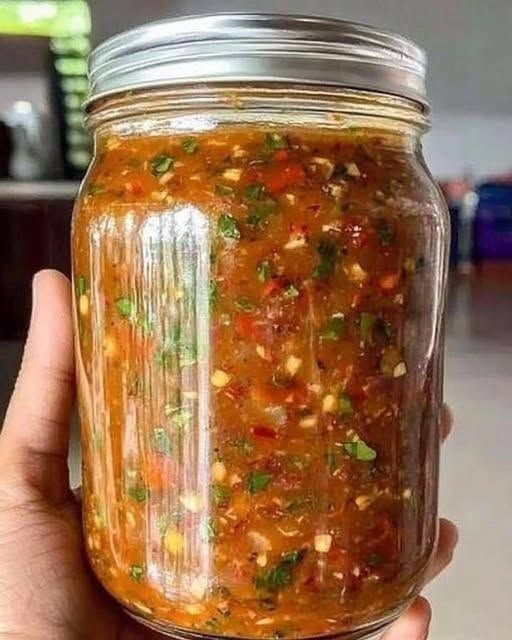

There’s something special about a homemade salsa picante. It’s fresh, bold, a little spicy, and packed with the kind of flavor that makes you keep going back for another bite. This version is inspired by the salsa shown in the photo—a chunky, vibrant red salsa filled with peppers, herbs, garlic, and fresh vegetables.
It’s the kind of recipe that works beautifully with tortilla chips, tacos, grilled chicken, burritos, eggs, quesadillas, burgers, or even a simple bowl of rice and beans. You can also adjust the heat depending on how spicy you like your salsa.
The best part is that you don’t need any fancy equipment or complicated cooking techniques. Everything comes together in one bowl or food processor, making this a great recipe for beginners.
Homemade Salsa Picante
Ingredients
- 6 medium ripe Roma tomatoes
- 2–4 fresh red chilies or jalapeño peppers
- 1 small onion
- 3 cloves garlic
- 1/2 cup fresh cilantro, roughly chopped
- 2 tablespoons fresh lime juice
- 1 tablespoon white vinegar
- 1 teaspoon salt, or more to taste
- 1/2 teaspoon ground cumin
- 1/2 teaspoon black pepper
- 1/2 teaspoon sugar, optional
- 1 tablespoon olive oil
- 1 small red bell pepper, finely chopped
- 1–2 tablespoons finely chopped hot pepper, optional for extra heat
Choosing Your Peppers
The peppers you use will determine how spicy your salsa turns out. Jalapeños give you a mild-to-medium kick, while serrano peppers make the salsa noticeably hotter.
If you prefer a milder salsa, remove the seeds and white membranes from the peppers before chopping them. For a hotter version, leave some or all of the seeds in.
You can also mix different types of peppers to create more flavor instead of simply adding more heat.
How to Make Salsa Picante
1. Prepare the Vegetables
Start by washing all of your fresh vegetables under cool running water. Remove the stems from the tomatoes and peppers.
Roughly chop the tomatoes, onion, bell pepper, and hot peppers. Peel the garlic cloves and roughly chop them as well.
You don’t need perfectly even pieces because everything will be chopped together later. If you prefer a chunky salsa, keep the pieces a little larger.
2. Blend the Base
Add the tomatoes, onion, garlic, hot peppers, bell pepper, cilantro, lime juice, vinegar, salt, cumin, and black pepper to a food processor.
Pulse several times rather than running the machine continuously.
This is important because you want salsa, not tomato soup. A few short pulses will give you a nice texture with small pieces of vegetables throughout.
If you don’t have a food processor, simply chop everything very finely with a sharp knife and combine it in a large bowl.
3. Add the Olive Oil
Drizzle in the olive oil and pulse the mixture once or twice more.
The olive oil adds a little richness and helps bring the flavors together. You don’t need much because the fresh vegetables should remain the main focus of the recipe.
At this point, taste the salsa.
4. Adjust the Flavor
This is where homemade salsa really shines because you can make it exactly the way you like it.
If it’s too spicy, add a little more tomato or bell pepper.
If it needs more brightness, add another squeeze of lime juice.
If the flavor tastes flat, add a little more salt.
For a slightly sweeter salsa, add a small amount of sugar. You don’t need much—just enough to balance the acidity and heat.
If you want more heat, add another chopped jalapeño or serrano pepper.
Remember that the flavors will develop as the salsa sits, so don’t immediately add large amounts of seasoning.
5. Let It Rest
Transfer the salsa to a clean glass container or bowl.
Cover it and place it in the refrigerator for at least 30 minutes before serving.
If you have time, letting it sit for a couple of hours is even better. The onion, garlic, peppers, cilantro, and lime have time to mingle, giving the salsa a deeper and more balanced flavor.
Give it a quick stir before serving.
How to Serve Salsa Picante
There are so many ways to enjoy this salsa.
The easiest option is obviously tortilla chips. Pour the salsa into a bowl, grab a bag of chips, and you’re ready to go.
But don’t stop there.
Spoon it over tacos, burritos, nachos, quesadillas, or enchiladas. It also makes a fantastic topping for grilled chicken, steak, fish, or roasted vegetables.
For breakfast, try adding a spoonful over scrambled eggs, fried eggs, breakfast potatoes, or a breakfast burrito.
You can even mix a little salsa into cooked rice or beans for an easy flavor boost.
For parties, serve the salsa alongside guacamole, sour cream, shredded cheese, and warm tortilla chips. It’s an easy appetizer that disappears quickly.
Roasted Salsa Variation
If you want a deeper, smokier flavor, roast the vegetables before blending.
Place the tomatoes, peppers, onion, and garlic on a baking sheet and roast them until they develop some browned or slightly charred edges.
Allow the vegetables to cool slightly, then blend them with the cilantro, lime juice, vinegar, salt, cumin, and black pepper.
Roasting adds a completely different character to the salsa. The vegetables become sweeter and slightly smoky while the peppers develop more depth.
You can also grill the vegetables instead of roasting them for an even stronger smoky flavor.
Tips for the Best Homemade Salsa
Use ripe tomatoes. The tomatoes provide most of the body and moisture, so choose tomatoes that are ripe and flavorful.
Don’t over-blend. A few pulses are usually enough. Over-processing can turn your salsa watery.
Taste before serving. Every batch of vegetables is different. One batch of peppers might be much hotter than another, so always adjust the seasoning at the end.
Give it time to rest. Fresh salsa tastes good immediately, but the flavor usually improves after sitting in the refrigerator for a while.
Control the heat. Start with less hot pepper if you’re unsure. It’s much easier to increase the heat than to rescue an overly spicy batch.
Storage
Keep homemade salsa in a clean, airtight container in the refrigerator.
Because this is a fresh homemade salsa made with raw vegetables, it should be treated as a refrigerated food. For the best quality, enjoy it within several days and always use clean utensils when serving.
If you’re interested in preserving salsa for long-term storage, don’t simply seal jars and leave them at room temperature. Use a tested, research-based canning recipe and follow the recommended processing method. The acidity and processing requirements need to be controlled for safe shelf-stable storage.
Final Thoughts
Homemade salsa picante is one of those recipes that’s incredibly easy to customize. You can make it mild and fresh, hot and fiery, chunky and rustic, or smooth and restaurant-style.
The combination of ripe tomatoes, fresh peppers, onion, garlic, cilantro, lime, and simple seasonings creates a salsa that’s bright, fresh, and full of flavor.
Once you make your own, you may find yourself keeping a container in the refrigerator all the time. It’s perfect for taco night, weekend gatherings, game-day snacks, or simply grabbing a bowl of chips when you’re craving something fresh and spicy.
And honestly, don’t be surprised if the first batch disappears faster than you expected. This is the kind of homemade salsa that makes people reach for “just one more chip.”